Patient Safety · April 9, 2026 · 11 min read
When You Can't Read Your Prescription: The Doctor Handwriting Crisis
Illegible prescriptions are not just an inconvenience — they cause wrong medications, dangerous dosing errors, and thousands of preventable deaths every year. The problem is worse than you think.
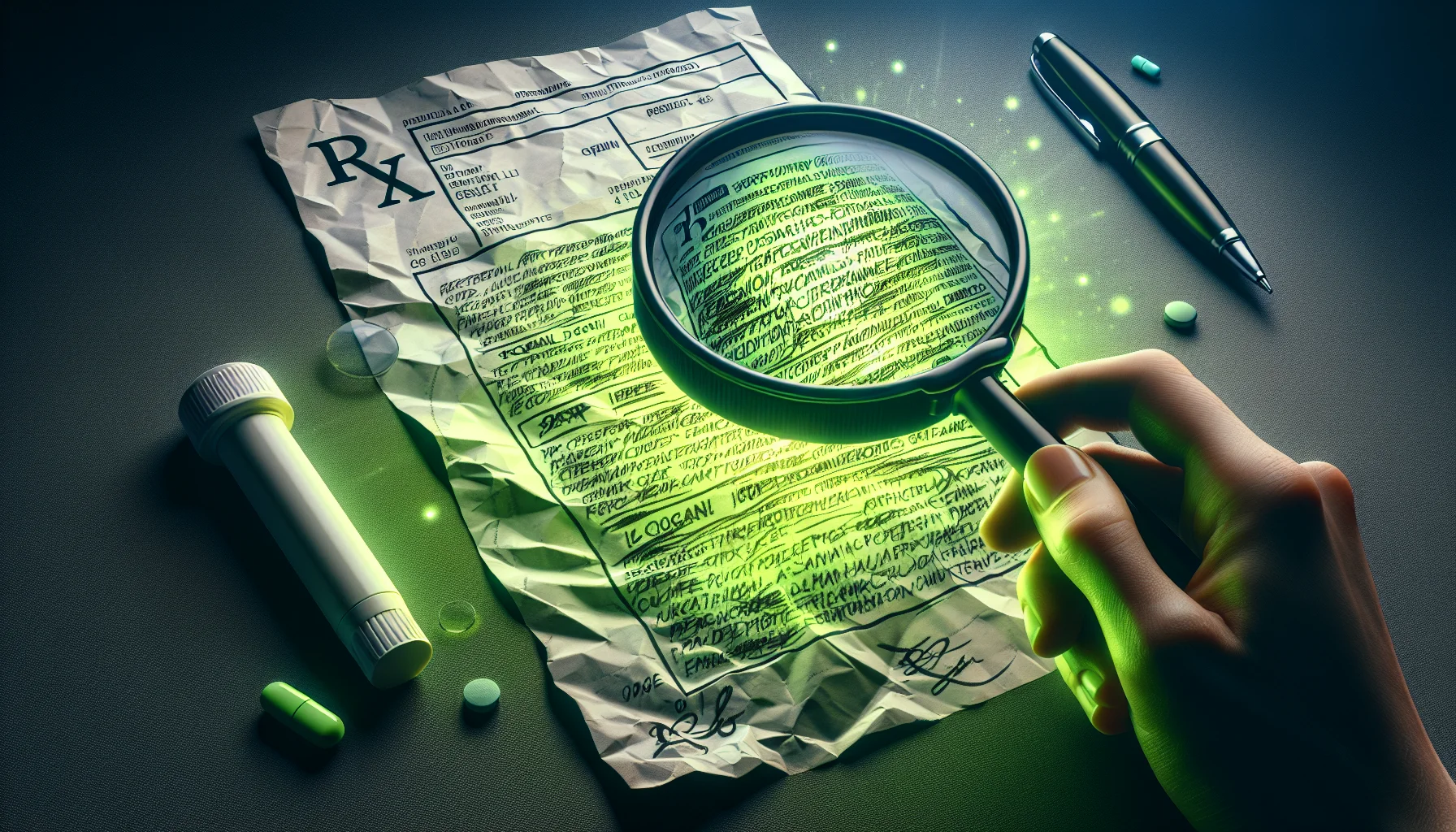
Illegible doctor handwriting is not a joke — it is a documented patient safety crisis. Over 7,000 deaths occur annually in the US due to medication errors, many linked to misread prescriptions. In India, where paper prescriptions dominate and doctors see 70+ patients per day, the problem is likely far more severe. Courts have intervened, medical councils have issued directives, but enforcement remains nearly nonexistent. AI-powered prescription scanning offers a practical, immediate solution that does not require systemic change.
- 7,000+ deaths annually in the US from medication errors linked to handwriting
- 24.41% of prescriptions show poor handwriting quality in studies
- Punjab High Court ruled legible prescriptions are a fundamental right
- AI can now read and verify prescriptions that humans struggle with
There is a joke that has circulated in Indian households for generations: "Doctor saab ka handwriting toh pharmacist bhi nahi padh sakta." The pharmacist cannot even read the doctor's handwriting.
But this is not a joke. It is a patient safety crisis that causes over 7,000 deaths annually in the United States alone — and the numbers in India, where paper prescriptions dominate and healthcare documentation is far less standardized, are likely significantly worse. We simply do not have reliable data, which is itself part of the problem.
Every prescription you cannot read is a gamble. And the stakes are your health.
The Scale of the Problem
The numbers behind illegible prescriptions are genuinely alarming, even by the conservative estimates available.
A landmark study published in the Journal of Clinical and Diagnostic Research examined hundreds of handwritten prescriptions and found that 24.41% had handwriting classified as poor — meaning it was difficult to impossible for pharmacists and nurses to read accurately. In government hospitals where doctors routinely see 70 or more patients in a single session, that percentage is likely much higher.
The US Institute of Medicine's seminal report To Err Is Human estimated that medication errors — a significant proportion of which stem from illegible prescriptions — cause between 44,000 and 98,000 preventable deaths annually in the United States. The 7,000 figure specifically linked to prescription errors is itself a conservative subset of that broader number.
Consider the math: if nearly one in four prescriptions has poor handwriting, and India processes roughly 3 billion prescriptions per year in urban areas alone, that means approximately 750 million prescriptions annually are at risk of misinterpretation. Not all of these lead to harm. But the ones that do can be devastating.
Real Incidents: When Handwriting Becomes Dangerous
The human cost of illegible prescriptions is documented in medical literature, court records, and patient safety databases. These are not hypotheticals — they are real events that happened to real people.
A pregnant woman in Hyderabad received the wrong medication because the pharmacist misread the handwritten prescription. The drug she received was contraindicated during pregnancy. The result was a miscarriage — entirely preventable, entirely caused by handwriting that looked like one drug name but meant another.
— Documented in Indian medical malpractice records
A patient was administered 40 units of insulin instead of 4 units. The doctor had written "4U" — the nurse read the "U" as a zero. This is a known risk with handwritten insulin orders and the reason why medical guidelines explicitly warn against abbreviating "units" as "U." The guidelines exist. Compliance with them in handwritten prescriptions is inconsistent.
— Institute for Safe Medication Practices (ISMP) case report
A woman in Scotland was dispensed erectile dysfunction cream instead of the eye ointment her doctor had prescribed. The handwritten prescription was so illegible that the pharmacist read one drug name as a completely different one. She applied the cream to her eyes for several days before the error was discovered.
— Reported in UK medical incident databases
These incidents share a common pattern: individually reasonable decisions by overworked professionals, combined with illegible handwriting, creating a chain of error that ends in patient harm. No single person in the chain intended harm. The system itself produced the harm.
Why Doctors Write Badly: The Systemic Reasons
Blaming doctors for bad handwriting is easy and satisfying. It is also mostly unfair. The reasons doctors write illegibly are deeply systemic.
Bad handwriting in doctors is not a character flaw. It is the inevitable result of a system that demands they see too many patients in too little time, with tools (pen and paper) that cannot keep pace with the demands placed on them.
Volume and time pressure. A government hospital doctor in India who sees 70 patients in a four-hour OPD session has approximately 3.4 minutes per patient. In that time, they must listen to the complaint, examine the patient, make a diagnosis, explain the treatment plan, and write the prescription. Writing speed is not a luxury — it is a survival mechanism.
Training reinforces speed over legibility. Medical students spend years writing notes at speed during lectures, ward rounds, and examinations. The habit of fast, compressed writing is developed over a decade of training and becomes deeply ingrained. By the time a doctor is in practice, their handwriting patterns are neurologically fixed.
Muscle fatigue is real. Writing by hand for hours, patient after patient, causes physical fatigue in the hand and wrist. As the day progresses, handwriting quality degrades. Studies have shown that prescriptions written in the last hour of a clinic session are significantly less legible than those written in the first hour.
Latin abbreviations and medical shorthand. Doctors use a specialized vocabulary of abbreviations — "OD" (once daily), "BD" (twice daily), "TDS" (three times daily), "SOS" (as needed) — that patients and sometimes pharmacists are not trained to interpret. When these abbreviations are combined with poor handwriting, misinterpretation becomes almost inevitable.
No accountability mechanism. There is currently no enforcement mechanism in India for prescription legibility. The Medical Council of India has issued guidelines recommending legible handwriting and the use of capital letters. But there are no penalties for illegible prescriptions, no auditing systems, and no feedback loops that would incentivize change.
The Pharmacist's Impossible Choice
When a pharmacist receives an illegible prescription, they face a decision that no healthcare professional should have to make: guess, or refuse to dispense.
In theory, the responsible action is to call the prescribing doctor and verify. In practice, this rarely happens. The doctor is seeing patients and unavailable by phone. The patient is standing at the counter, unwell, waiting. The pharmacy has a queue of twenty people behind them. Calling the doctor, waiting on hold, and getting a callback could take hours — hours the patient may not have if they need the medication urgently.
I have been a pharmacist for 22 years. I estimate I have guessed at least 50,000 prescriptions in my career. I use context clues: the patient's age, the likely diagnosis, what medications are commonly prescribed for those symptoms, the pattern of the doctor's handwriting that I have learned over time. I am right most of the time. But "most of the time" is not acceptable when we are talking about someone's health.
— Senior pharmacist, Bangalore (anonymized)
The problem compounds with look-alike drug names. Indian pharmaceutical brands number in the tens of thousands, and many share similar-sounding names. "Losartan" and "Lisinopril" are both blood pressure medications with very different mechanisms. "Hydroxyzine" (an antihistamine) and "Hydralazine" (a blood pressure drug) look similar in hasty handwriting. When the pharmacist is guessing, these similarities become landmines.
Some pharmacists develop encyclopedic knowledge of specific doctors' handwriting patterns. A pharmacist near a particular hospital may handle hundreds of prescriptions from the same ten doctors and essentially learns their personal script. This works — until the patient takes a prescription from an unfamiliar doctor. Or until the experienced pharmacist goes on leave and a substitute tries to decode the same writing.
What Courts and Regulators Say
The judiciary has taken a surprisingly strong stance on prescription legibility in India — stronger, in fact, than the medical regulatory bodies themselves.
The Punjab and Haryana High Court issued a landmark observation stating that "a legible prescription is a fundamental right" of every patient. The court directed the Medical Council of India to issue comprehensive guidelines on prescription legibility and recommended that prescriptions be written in capital letters or, preferably, typed or digitally generated.
The Medical Council of India (now the National Medical Commission) has issued guidelines directing doctors to write prescriptions legibly, use generic drug names, and avoid dangerous abbreviations. These guidelines exist on paper. Their enforcement exists almost nowhere.
The right to health encompasses the right to receive accurate, legible medical instructions. A prescription that cannot be read is a prescription that cannot be followed. It violates the patient's fundamental right to proper medical care.
— Punjab and Haryana High Court observation, 2023
In other countries, regulatory action has been more decisive. The United States moved aggressively toward e-prescribing after the 1999 To Err Is Human report. As of 2024, most US states either mandate or strongly incentivize electronic prescriptions, particularly for controlled substances. E-prescribing rates in the US now exceed 80% — a dramatic shift from the paper-dominated era of the 1990s.
India's regulatory framework is slowly moving in this direction. The ABHA (Ayushman Bharat Health Account) system includes provisions for digital prescriptions. But adoption, particularly in the private sector, remains in early stages. The gap between regulatory aspiration and ground-level reality remains enormous.
How AI Changes the Equation
The systemic solutions — mandating e-prescribing, building universal EMR infrastructure, enforcing legibility standards — will take years to implement across India. But there is a technology available today that addresses the problem from the patient's side: AI-powered prescription reading.
Modern AI vision models can extract text from handwritten prescriptions with accuracy that matches or exceeds human pharmacists. Combined with pharmaceutical database verification, AI can transform an illegible prescription into a clear, verified medication list in seconds.
Modern AI vision models — the same technology that powers self-driving cars and facial recognition — can process handwritten text with remarkable accuracy. When trained specifically on medical handwriting, these models can decode prescriptions that would challenge even experienced pharmacists.
But reading the text is only half the solution. The critical second step is verification. An AI system that reads "Amlodipine 5mg" from a scrawled prescription should cross-reference that against pharmaceutical databases to confirm the drug exists, the dosage is standard, and the combination with other medications the patient takes is safe.
MedLogsRx uses GPT-4 Vision to scan any paper prescription and extract medicine names, dosages, frequency, and duration. The AI does not simply do optical character recognition — it understands context. It knows that a certain squiggle, in the context of a cardiac patient's prescription, is more likely to be "Atorvastatin" than "Azithromycin." It cross-references against pharmaceutical databases to catch potential errors.
Here is how it works in practice:
- Scan: Point your phone camera at any paper prescription. The AI captures the image with medical-grade clarity enhancement.
- Extract: The AI identifies and extracts every medication entry — drug name, dosage, frequency, duration, and special instructions.
- Verify: Each extracted detail is presented clearly for your review. You see both the original handwriting and the AI's interpretation side by side.
- Store: The verified prescription is stored permanently, organized by patient, date, and prescribing doctor. The original image is preserved alongside the extracted data.
The next time a pharmacist squints at a prescription slip, you will already have the complete, clearly typed medicine list on your phone. No guessing required. No dangerous assumptions. No risking your health on whether a pharmacist correctly interprets a rushed scribble.
The doctor handwriting crisis will eventually be solved by systemic changes — e-prescribing mandates, universal EMR adoption, regulatory enforcement. Until that day comes, MedLogsRx puts the solution in your hands today. Because your health should never depend on someone else's handwriting.
Sources
- CoverYou — Why Doctors' Handwriting is No Longer a Laughing Matter
- India Legal — Doctors' Scrawl: Handwriting on the Wall
- Institute of Medicine — To Err Is Human (1999)
- Journal of Clinical and Diagnostic Research — Prescription Legibility Study
- Institute for Safe Medication Practices — LASA Drug Name Errors