Caregiving · April 28, 2026 · 10 min read
The Night Appa Reached Emergency and Nobody Knew His Medicines
In Indian emergency rooms, missing medicine history turns treatable episodes into dangerous guesswork. Why one QR-linked list can save hours, errors, and avoidable harm.
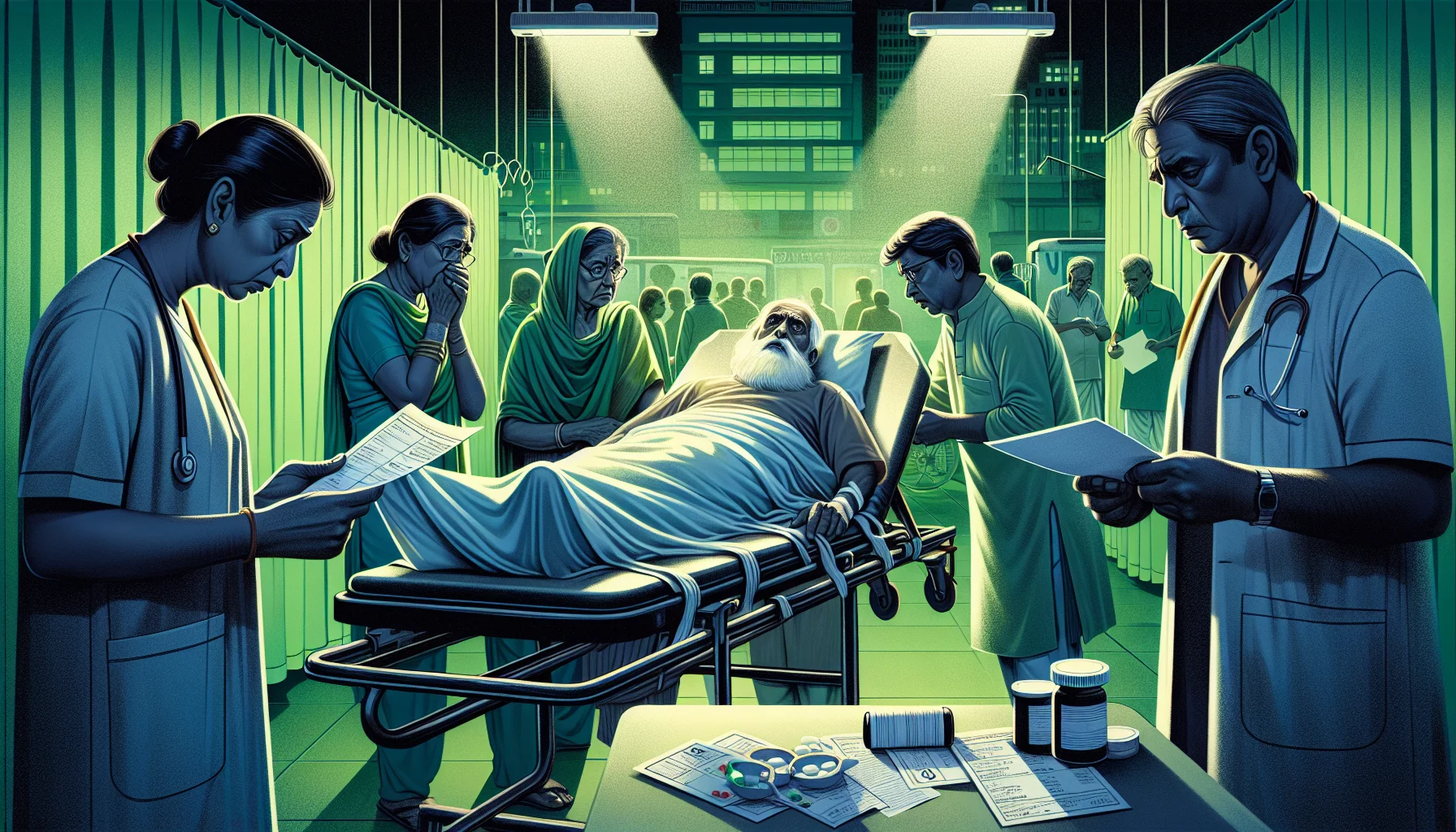
In India, emergency care often begins with missing medicine history. That delay is not paperwork trouble; it is a patient safety risk.
- A prospective Indian emergency study found 27.1% of screened ED visits were medication-related, and 59.2% were preventable
- In that same cohort, only 43.3% were compliant to prescribed medicines, with failure to receive drugs and sub-therapeutic dosing driving many visits
- Among older Indians, pooled prevalence is 49% for polypharmacy and 31% for hyperpolypharmacy, making recall-based medicine history unreliable
- Indian hospital reviews report high medication-error burden, including prescribing and administration errors that worsen when history is incomplete
- A QR-shareable, always-updated medicine list can cut emergency handoff confusion and help doctors treat faster with fewer blind spots
At 11:40 pm in Coimbatore, Meena's phone rang from her mother's number, but it was a neighbour speaking. "Akka, Appa collapsed near the bathroom. We are taking him to casualty."
By midnight, Appa was on a trolley under bright white lights. The duty doctor asked the question every Indian family hears in emergency: "What medicines does he take daily?" Meena knew some. BP tablet in the morning. Sugar tablet after breakfast. One blood thinner after his stent last year. Maybe another after dinner. She was not sure of names, dosages, or which one he had stopped last month because of dizziness.
Her brother started opening WhatsApp photos of old prescriptions. Her aunt called the neighbourhood chemist. A junior doctor tried to piece together a medicine history from half-remembered brand names and one torn strip in a plastic bag. In emergency medicine, those 20-30 minutes matter. Treatment decisions are made anyway. The question is whether they are made with full information or guesswork.
This post is about that gap: the dangerous distance between "we have prescriptions at home" and "the emergency team has an accurate medication list right now."
The Emergency History Gap Is Real (And Measured)
Indian emergency departments are not seeing rare edge cases. They are seeing medicine-related harm every single day. A prospective Indian emergency study published in 2021 reported that among screened visits, 27.1% were medication-related visits (MRVs). More importantly, 59.2% of those were considered preventable.
These are not "wrong medicine" stories alone. They are often "nobody had the full picture in time" stories. In Indian ER settings, history is frequently reconstructed from memory, old files, and family calls while triage is happening.
Medication-related visits to the emergency department are substantial though weakly recognized and intervened.
— "Medication – A boon or bane: Emergencies due to medication-related visits" (India prospective ED study)
| What doctor asks in first minutes | What family often has | Clinical risk |
|---|---|---|
| Current daily medicine list with exact dose | Old OP slip + partial memory | Dose duplication or omission |
| Last dose timing | "Maybe morning" / "not sure" | Unsafe repeat dosing |
| Blood thinner / insulin status | Brand nicknames from chemist | Bleeding or glucose management errors |
| Recent medicine changes | Scattered files at home | Treatment based on outdated regimen |
Why Even Loving Families Cannot Recall Medicines Accurately
Families are not careless. The system is complicated. In India, one elder may be seeing a diabetologist at a private clinic, a cardiologist at a city hospital, and a local GP for day-to-day issues. Each writes on separate slips, often with brand substitutions at the chemist.
Among older Indians, the medication load itself is substantial. A systematic review and meta-analysis from India reported pooled prevalence of 49% for polypharmacy and 31% for hyperpolypharmacy. If one person is on 5 to 10+ medicines, no family can reliably reconstruct exact regimens from recall under panic.
My mother takes eight tablets. We know them by strip colour, not by generic name. In emergency, doctor asked names; we started saying "white one after lunch" and felt helpless.
— Caregiver account, Pune (anonymised)
- High medicine counts increase omission risk during verbal history
- Paper prescriptions fragment across hospitals and homes
- Brand substitutions create naming confusion at triage
- Stress further reduces recall accuracy when seconds matter
The emergency handoff problem is not motivation; it is information design. A system that depends on family memory for multi-drug regimens will fail at the worst possible time.
Medication Errors in Indian Hospitals: The Baseline Risk Is Already High
A recent Indian systematic literature review on medication errors across hospital settings highlights substantial error burden, including prescribing, transcription, dispensing, and administration stages. Emergency care enters this environment at full speed.
Now add one more risk amplifier: missing or inaccurate pre-admission medicine history. When baseline process risk is already non-trivial, poor handoff multiplies risk rather than adding to it.
| Risk layer | Without reliable list | With reliable list |
|---|---|---|
| Triage medication check | Starts from memory | Starts from verified current record |
| Drug interaction awareness | Partial | Higher confidence |
| Dose continuation decisions | Conservative guessing | Evidence-based continuation/hold |
| Family communication | Repeated clarifications | Single source of truth |
Developing and maintaining electronic documentation of patients' medical records may serve as a valuable tool to detect early signals of potential ADRs.
— South India tertiary care ADR study
What 30 Minutes of Confusion Costs in a Casualty Bay
When we say "delay," people imagine waiting room inconvenience. In emergency medicine, delay can mean treatment sequencing changes. A medicine that should be continued is paused. A medicine that should be paused is repeated. A high-risk medicine history (like antiplatelets or anticoagulants) is discovered late.
- Initial treatment plan made with partial medicine context
- Lab and imaging are interpreted without complete exposure history
- Consultant review triggers additional questions and revisions
- Nursing team updates orders mid-stream, increasing process complexity
Half the stress is not just the illness. It is standing there while doctors ask, "what exactly is he taking?" and realizing we don't have one clean answer.
— Daughter caring for father with diabetes and heart disease, Madurai (anonymised)
In emergency, accurate medication history is treatment infrastructure. If it arrives late, care quality becomes unnecessarily variable.
A Better Indian Workflow: QR Handoff Instead of Memory Handoff
What should happen when a patient reaches emergency? One screen should answer four things immediately: current medicines, dosages, schedule, and last taken status. Not a file hunt. Not a family quiz. A direct handoff.
This is exactly where MedLogsRx fits. You scan prescriptions as they come. The app maintains one up-to-date medicine list. At emergency time, the caregiver can show a QR link to the care team instead of narrating from memory.
| Old handoff model | QR handoff model |
|---|---|
| "Wait, I'll check old file photos" | "Here's the current list, please scan" |
| Brand-name confusion | Structured list with dosage context |
| Multiple family calls for confirmation | Single shareable source |
| High anxiety, low certainty | Higher certainty in first minutes |
Set It Up Before the Crisis: A 10-Minute Family Protocol
The best emergency medicine-list workflow is built on an ordinary Sunday afternoon, not at midnight in casualty. If your amma, appa, nana, or dadi is on long-term medicines, do this once and review monthly.
- Scan every active prescription into MedLogsRx
- Remove medicines that doctors have stopped
- Add timings clearly (before food, after food, bedtime)
- Verify low-stock alerts are enabled
- Save and test the QR share flow on two family phones
- Keep one family member as primary emergency coordinator
After one hospital scare, we made a family rule: no elder in our home should have an "unknown medicine list" ever again.
— Caregiver, Hyderabad
You cannot predict an emergency. You can remove one major source of emergency chaos: missing medication history.
If this sounds like your family, start today with MedLogsRx and keep one accurate, shareable medicine record ready before you need it.
Sources
- Medication – A boon or bane: Emergencies due to medication-related visits (India prospective ED study)
- Epidemiology of Medication Errors in Indian Hospital Settings: A Systematic Literature Review
- Prevalence of Polypharmacy, Hyperpolypharmacy and Potentially Inappropriate Medication Use in Older Adults in India: Systematic Review and Meta-Analysis
- Polypharmacy and self-medication among older adults in Indian urban communities
- Adverse drug reactions and risk factors among Indian ambulatory elderly patients
- Prevalence of adverse drug reactions at a private tertiary care hospital in South India