Medication Adherence · April 21, 2026 · 10 min read
The Doctor Said Come Back in Three Months. Nobody Tracked What Happened in Between.
61% of Indian diabetics have low medication adherence. With 90 million Indians living with diabetes and 220 million with hypertension, the gap between doctor visits is where chronic disease quietly wins.
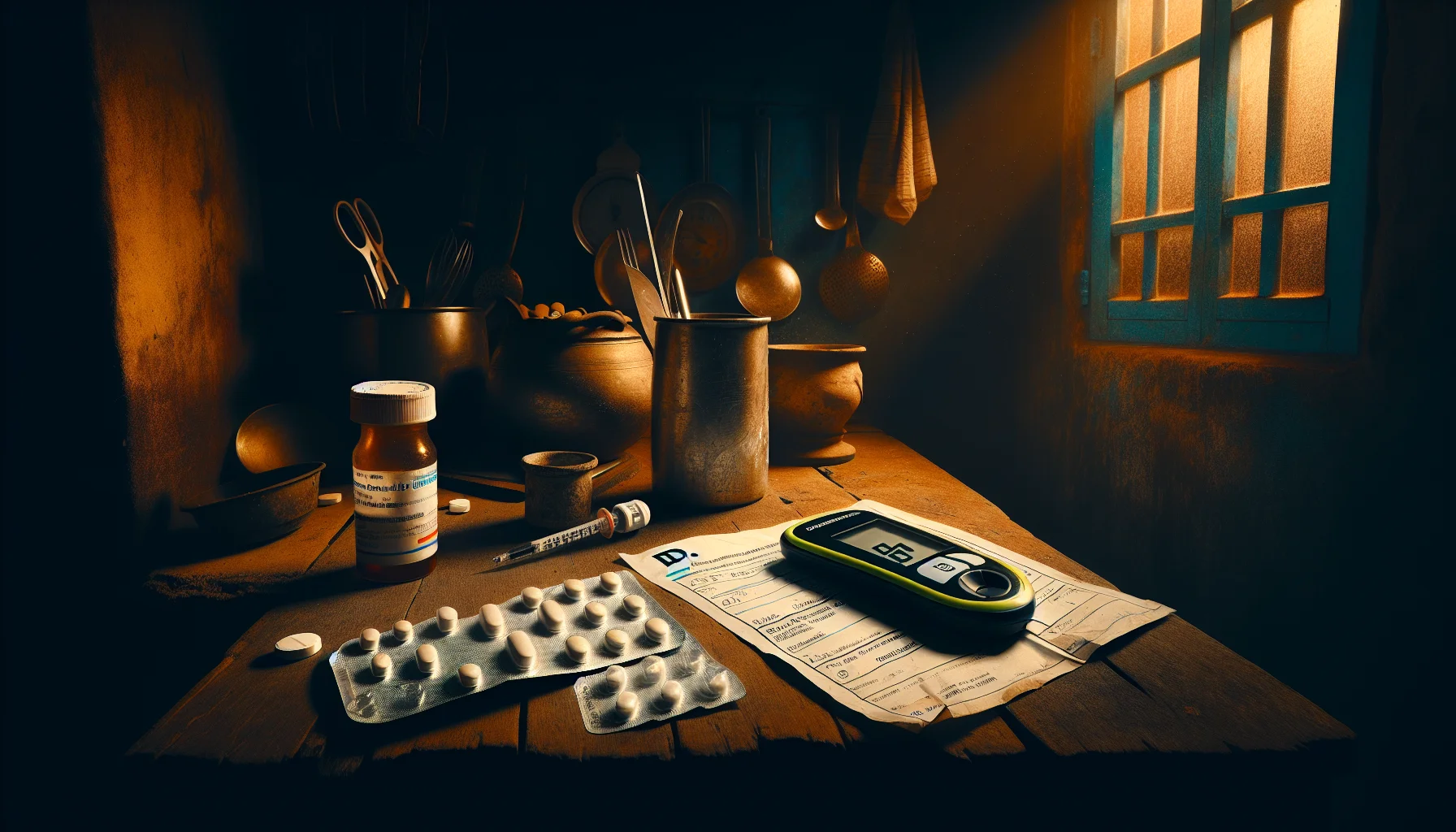
India's chronic disease crisis is not just about diagnosis — it is about what happens in the months between doctor visits, when no one is watching and most people quietly stop taking their medicines.
- India has 90 million adults living with diabetes — second only to China — and 220 million with hypertension
- 61% of Indian type 2 diabetes patients have low medication adherence; the pooled non-adherence rate across India is 48% (2020–2025 meta-analysis)
- Median hypertension non-adherence in India exceeds 54% — and only 9% of people on treatment have their BP under control
- The most common reason Indian patients give for skipping their BP medicine: "I didn't feel sick" — cited by 50% of those not taking medication
- In 2024, diabetes caused 334,922 deaths in India — the vast majority preventable with consistent, tracked medication
Nanna was diagnosed with Type 2 diabetes in 2019. His doctor at the government hospital in Tambaram — a good doctor, overworked and honest — sat with him for twelve minutes, explained what Metformin does, told him to check his sugar every two weeks, and said: "Come back in three months."
Nanna took the medicines every day for the first two weeks. His fasting sugar dropped from 195 to 138. He felt better. He told his daughter in a phone call: "This tablet is working." By week four, he had started skipping the evening dose on days when dinner was late. By week seven, he was taking the morning tablet only "when he remembered." By month three, when he returned to the clinic with the same crumpled prescription slip, his fasting sugar had crept back to 181.
The doctor looked at the reading and asked what had happened. Nanna said he had been taking the medicines. He was not lying, exactly. He had taken them — sometimes. He just had no record of when, and neither did anyone else.
This is how chronic disease quietly wins in India. Not in the clinic, where everyone is trying their hardest. In the three months between visits, when a medicine strip sits on the kitchen shelf and life gets in the way and there is nobody keeping score.
The Scale Nobody Talks About
India is called the diabetes capital of the world, and the number bears the weight of that title. As of 2024, 89.8 million Indian adults — one in every seven adults with diabetes on the planet — are living with the condition, according to the International Diabetes Federation's 11th Diabetes Atlas. China is first. India is second. The US, at 39 million, is a distant third.
But the diagnosis numbers, staggering as they are, tell only half the story. The other half is what happens after diagnosis — after the patient walks out of the clinic with a prescription, a set of lifestyle instructions, and an appointment three months from now. The research on that half is equally staggering, and considerably less discussed.
Nearly half of all Indian patients diagnosed with type 2 diabetes are not taking their medicines as prescribed. A 2025 Eastern India study of 374 T2D patients found that 61% had low medication adherence scores. A parallel picture exists for hypertension: a 2024 systematic review found the median non-adherence rate for anti-hypertensive medication across 49 Indian studies was more than 54%. Of the 220 million Indians living with hypertension, only 9% have their blood pressure under control.
These are not fringe cases. These are the majority of patients with India's two most common non-communicable diseases. The diagnosis exists. The prescription exists. The medicine sits on the shelf. And roughly half the time, it is not being taken.
Medication non-adherence in patients with T2DM persists as a major public health challenge in India, further exacerbating the country's burgeoning diabetes epidemic. The extent of medication adherence among patients with DM in India is deeply concerning — and the heterogeneity across regions, settings, and populations suggests the problem is even larger than current data captures.
— PMC Systematic Review and Meta-Analysis: Medication Adherence and its Predictors in Patients with T2DM in India (2025)
India has more than 300 million people with chronic conditions requiring daily medication. Roughly half are not taking their medicines as prescribed. This is not a marginal healthcare problem — it is the primary challenge of chronic disease management in the country.
Why People Stop — And Why Nobody Tells the Doctor
The standard explanation for medication non-adherence is forgetfulness. Patients forget. Life intervenes. This is true, but it is incomplete — and focusing on forgetfulness misses the reasons that actually drive the majority of skipped doses in India.
The most revealing data point from the India Hypertension Control Initiative's national survey: among people who were aware of their hypertension and not taking medication, the most common reason — cited by 50% of them — was: "I didn't feel sick." Not cost. Not access. Not side effects. I. Did. Not. Feel. Sick.
| Reason for non-adherence | Prevalence in Indian chronic disease patients | What is actually happening |
|---|---|---|
| "I didn't feel sick" | 50% of hypertensives not on medication (IHCI, 2023-24) | Asymptomatic chronic disease is being managed as an episodic illness — medicine for when you feel bad, not daily maintenance |
| Forgetfulness / no reminder system | Common across all adherence studies | No external cue to trigger dose — once a habit breaks, it rarely restores without intervention |
| Cost and affordability | Significant, especially in rural and low-income settings | Patients stretch medicines by skipping alternate days — sub-therapeutic dosing with the illusion of adherence |
| Drug side effects (real or perceived) | Reported in 10-25% of non-adherent patients | Often manageable if discussed with the doctor — but patients stop without telling anyone |
| Complex regimen — too many medicines, too many timings | Higher with polypharmacy; 3+ medicines dramatically increases non-adherence | Cognitive load exceeds what patients can consistently manage without a system |
| "Medicines were not prescribed" / confusion about what to take | 39% in one IHCI survey subset | Prescription not understood, or patient unclear which medicines are ongoing vs one-time |
What is consistent across every study is the silence. Patients do not tell their doctors they have been skipping doses. When the HbA1c comes back worse than expected after three months, the patient says "I was taking the medicines." The doctor adjusts the dose or adds another medicine. The underlying adherence problem — which was causing the poor control — is not surfaced, because the patient feels ashamed, and the doctor has twelve minutes and forty more patients waiting.
When I miss a few days and then take it again before the appointment, I feel like I have reset. The doctor checks my sugar and it is not too bad — because I took the tablet the day before. He thinks I was regular. I don't correct him. I know I should. I just don't.
— Patient, Chennai, managing Type 2 diabetes for 6 years (personal account, anonymised)
What Three Months of Skipping Actually Does to a Body
Chronic disease is slow. That is what makes non-adherence so hard to take seriously in the moment — and so catastrophically consequential over time. The damage from skipped doses does not announce itself the way an infection does. It accumulates, organ by organ, over months and years, until one day it arrives in a form that can no longer be managed with a simple prescription.
For diabetes, the marker is HbA1c — the three-month average blood sugar level that a doctor checks at every follow-up appointment. A patient who takes their Metformin daily might see HbA1c at 6.8%. The same patient, skipping doses intermittently for three months, might come back at 8.5% — still no symptoms, still feeling "okay." But each percentage point above the target is accumulating damage in the microvasculature: the tiny blood vessels in the eyes, kidneys, and nerves.
For hypertension, the damage is equally invisible until it is not. A patient who skips their Amlodipine on busy days runs a blood pressure of 150/95 instead of 125/80. There are no symptoms. Months later: a transient ischemic attack. A year later: a full stroke. The attending physician at the emergency room asks when the BP was last checked. The family says: "He had an appointment three months ago and it was fine."
The court record of the NCDRC case (2024) is worth reading carefully. A 67-year-old woman in Kolkata, on dialysis for chronic kidney disease linked to Type-2 diabetes, died of cardiac failure. The chain of events that ended her life began years before the final hospitalization. The kidney disease itself was a complication of diabetes. The dialysis was a complication of the kidney disease. By the end, the medicine list had grown to include Vancomycin, blood transfusions, and intensive monitoring — all of it downstream from years of a chronic condition that the body had been slowly losing its battle against.
— NCDRC Case: Compensation awarded for delayed transfusion in T2D dialysis patient, Kolkata (Indian Express, 2024)
The Three-Month Appointment: Why the System Can't See Inside the Gap
India's outpatient chronic disease care model is built around the follow-up appointment. Come in, get your sugar or BP checked, get the prescription renewed, come back in three months. For the healthcare system, this is efficient: it is how a doctor at a government hospital OPD can see sixty patients in a morning. For the patient, it means that seventy-eight days of actual health behaviour — what they ate, whether they took their medicines, how stressed they were — is compressed into a five-minute consultation and a single blood test result.
The appointment cannot see inside the gap. It can only see where the patient is at the moment they sit down. And as the data shows, many patients are at a temporarily better place on the day of the appointment than they are on the average Tuesday in between.
The gap is also where the shoebox problem appears in its most dangerous form. A patient sees a cardiologist for hypertension, a diabetologist for sugar, and visits a private GP for everything else. Each appointment is three months apart. None of the three doctors has a complete picture of what the others said, what was prescribed, or whether any of it is being taken. The patient is the connecting thread — but they have no system, no log, and often no reliable memory of what happened across three sets of consultations over nine months.
When I see a patient at the three-month appointment, I am working from the HbA1c result and whatever they tell me. If they tell me they were regular with medicines, I have no way to verify it. If their control is poor, I do not know if the medicine is not working or if they were not taking it. I have to ask. Most of the time they say they were regular. Sometimes I can tell that is not quite true. But I have twelve minutes and thirty patients outside.
— Diabetologist, government medical college hospital, Tamil Nadu (personal communication, paraphrased for privacy)
| What the doctor sees at the 3-month appointment | What actually happened in between | The clinical consequence |
|---|---|---|
| HbA1c: 8.2% — worse than last time | Patient was adherent for weeks 1–3, then skipped 40% of doses from week 4 onward | Doctor increases dose or adds medicine — adherence problem is masked by dose escalation |
| BP: 148/92 — still not controlled | Medicines taken consistently for 3 days before appointment; skipped most other days | Doctor adds a second BP medicine — now two medicines, but adherence to each is lower still |
| Patient: "I've been regular with medicines" | Approximately 60% adherent — close enough that patient genuinely believes this | No discussion of adherence barriers; no change in approach; same pattern repeats |
| Creatinine slightly elevated | Uncontrolled BP over months slowly stressing kidneys | New prescription added — nephro-protection — patient now on 4 medicines with no tracking system |
The three-month appointment is not a check-in on three months of health. It is a five-minute window at the end of three months. What happens inside the gap — between visits, between doses, between checkups — determines whether chronic disease is actually being managed or merely treated on paper.
Urban Clinic vs Government OPD: The Gap Looks Different, The Consequence Is the Same
Medication non-adherence in chronic disease is not a problem of one type of Indian patient. It cuts across income levels, education levels, urban and rural settings — the 2025 meta-analysis found non-adherence rates ranging from 11% in some facility-based urban settings to 68% in community settings. The mechanisms are different, but the gap they create is the same.
In urban India — Chennai, Pune, Bengaluru — the diabetic or hypertensive patient typically has better access to medicines and better access to doctors. What they often lack is a system. They work long hours. The morning metformin gets forgotten on busy Mondays. They are on three medicines from two different doctors. The tablet they need after lunch is in the office bag; they leave it at home. The strip runs out on a Thursday and the chemist near the office doesn't stock that brand; they miss two days waiting for the chemist near the house to reorder.
In smaller towns and rural areas, the barriers compound. Affordability is a real constraint — many patients genuinely cannot afford the full course, so they take half-doses or skip alternate days to make the strip last longer. The nearest doctor might be forty minutes away; the follow-up appointment might be skipped entirely if a family emergency intervenes. Government health centres often have stock-out days. The patient who was told "take these medicines every day for life" returns to find the medicine is not available that week, misses several days, and loses the habit entirely.
India's dual burden of infectious and chronic diseases often competes for the same health system resources and patient attention. Patients who lived for decades managing acute illness as episodic — you get sick, you see a doctor, you take the medicine until you're better — find the "take this tablet every day forever even when you feel fine" logic of chronic disease management genuinely counterintuitive. It is a different relationship with medicine than most Indians have been raised to have.
— PMC, Clinical Diabetology (2025): Medication Adherence and Quality of Life Among T2D Patients, Eastern India
What Tracking Between Visits Actually Changes
The clinical literature on medication adherence interventions is clear about what works: reminders work. Simplification of regimens works. Caregiver involvement works. Self-monitoring — the act of logging whether you took your medicine — works, because the act of recording creates a feedback loop that forgetfulness cannot. A patient who has to mark a dose as "taken" or "missed" in an app becomes, over time, a more adherent patient — not because the app heals anything, but because it makes the invisible visible.
For a diabetic patient managing Metformin twice daily and a BP tablet in the morning, the tracking problem is relatively simple. For an elderly patient on five medicines across three timing windows — the kind of patient we described in our earlier post on polypharmacy — tracking without a system is not a matter of effort or intent. It is cognitively unmanageable. No one can reliably remember, across 90 days, whether they took every dose of every medicine at the right time.
MedLogsRx was built for the specific shape of this problem in India. The prescription scanner means that after every doctor visit — even if the handwriting on the slip is difficult and the generic name is different from the brand on the strip — the medicine name, dose, and frequency go into the app automatically. The patient does not have to type anything. The family member who set it up does not have to memorise twelve medicine names.
The dose log is the piece that changes what happens at the three-month appointment. When Nanna's daughter opens the app before the next clinic visit, she can see: he took his morning Metformin 61 of the past 90 days. She knows to tell the doctor this. The doctor knows the HbA1c result reflects 61-day adherence, not 90-day. The treatment decision is based on what actually happened — not on the optimistic version that both patient and doctor were previously working with.
My mother has diabetes and BP. I set up MedLogsRx for her after she forgot her evening tablet three days running and didn't tell anyone. The reminders sorted the forgetting part. But the thing that actually changed the appointment was bringing the log. Her doctor said it was the first time he'd seen a real adherence record from a patient — not just what they remembered. He adjusted her dose based on what was actually happening, not what we thought was happening.
— Software engineer, Bengaluru, managing mother's diabetes remotely (MedLogsRx user)
India will have 156.7 million people with diabetes by 2050 — a 75% increase from today's 90 million. Hypertension is already in 220 million Indians. The healthcare system cannot solve the gap between visits by hiring more doctors or building more hospitals. The gap is a daily, individual problem — ninety days at a time, two tablets at a time. It requires a daily, individual solution: the kind that fits in a phone and sends a reminder at 8am.
The doctor cannot see inside the three months. MedLogsRx can.
Sources
- IDF Diabetes Atlas 11th Edition (2025): Top 10 Key Takeaways from India
- PMC: Medication Adherence and its Predictors in Patients with T2DM in India — Systematic Review and Meta-Analysis (2025)
- Clinical Diabetology: Medication Adherence and QoL Among T2D Patients — Eastern India Study (2025)
- Journal of Hypertension: Systematic Review of Medication Adherence in Patients with Hypertension in India (2024)
- BMC Public Health: India Hypertension Control Initiative — Health-Seeking Behaviour and Prescription Practices (2025)
- Indian Express: NCDRC Orders Compensation in T2D Dialysis Patient Death — Delayed Transfusion (2024)